Many Philippine small businesses don't sell in just one place anymore. There's the physical store, a Facebook Page and Messenger, one or two online marketplaces, maybe a website, and sometimes resellers ordering through Viber. Each channel brings in customers, but each one also has its own idea of how many items are left. Sooner or later someone sells the last unit twice, a customer pays for something that's already gone, and the team spends the evening apologizing and issuing refunds. That's an inventory sync problem, and it grows with every new channel you add.
Why stock counts drift apart
In most growing shops, the stock number lives in several places at once: a notebook at the counter, a spreadsheet updated at the end of the day, and separate listings on each online channel. Every sale has to be subtracted by hand from each of them. When things are slow, that works. During a sale, a payday weekend, or the December rush, people skip updates or do them late, and the numbers quietly drift apart.
The common signs are easy to spot:
- Orders get cancelled because an item turned out to be out of stock.
- Staff check the shelf or the stockroom before confirming every online order.
- Month-end counts never match the spreadsheet, and nobody knows why.
- Popular items are marked "sold out" on one channel while there's still stock on another.
- Someone spends hours each week copying orders from chats and marketplaces into one list.
One source of truth for stock
The fix starts with a simple rule: there should be exactly one place where the real stock number lives. Every channel reads from it, and every sale, return, or delivery updates it. This can be a proper inventory system, a point-of-sale system with online integrations, or a custom tool built around how your business actually works. What matters is that people stop maintaining separate counts per channel.
Before choosing a tool, get the basics in order. Give every product and variant, such as size or color, a unique code, and use the same code everywhere. Decide who is allowed to adjust stock by hand and require a reason for every adjustment. These habits make any system, simple or advanced, far more reliable.
If every channel keeps its own stock count, you don't have inventory. You have several guesses.
Bring orders into one list
Stock is only half the problem. Orders also arrive from everywhere: marketplace notifications, Messenger chats, website checkouts, and walk-in sales. When each lives in a different app, it's easy to miss one or pack the wrong item. Pulling every order into one list, with its channel, payment status, and delivery status, lets the team see the whole day at a glance. Many marketplaces and payment providers offer integrations or exports that make this possible, and orders taken through chat can be logged with a short form instead of being retyped from screenshots.
What to automate first
You don't need to connect everything at once. A sensible order for most shops is:
- Automatic stock deduction when an order is confirmed on any channel.
- Low-stock alerts sent to the person who handles reordering.
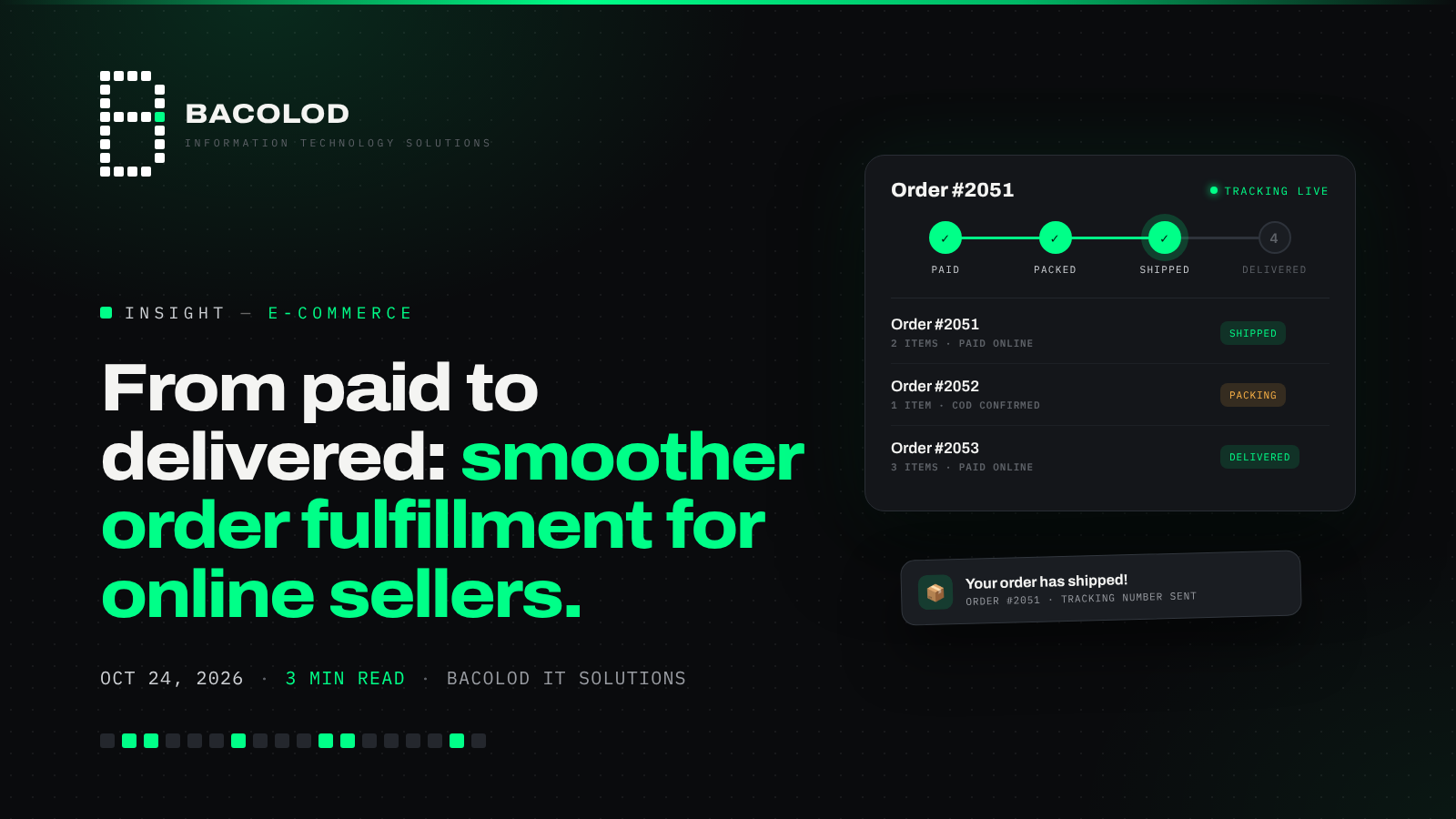
- One combined order list with clear statuses: paid, packed, shipped, delivered.
- Automatic "out of stock" or hidden listings when an item reaches zero.
- Simple daily reports on what sold, where, and what needs restocking.
Start with the channel that brings in the most orders and connect it to your main stock count. Once that works reliably for a few weeks, add the next one. This keeps mistakes small and gives your team time to adjust to the new routine.
Keep a little buffer
Even with good syncing, there can be short delays between a sale on one channel and the update on another. For fast-moving items, it helps to hold back a small buffer, showing slightly fewer units online than you actually have. It's also worth doing quick spot counts of your best sellers every week instead of waiting for a full count at month-end. Small, regular checks catch problems while they're still easy to explain.
The takeaway
This week, list every place where you sell and every place where you track stock. If those lists don't point to one shared number, that's where your oversells and missed orders come from. Choose one source of truth, give every product a single code, and connect your busiest channel first. Once the numbers stay matched for a month, adding new channels becomes an opportunity instead of another headache.
Got a task like this?
Tell us what's eating your team's time. We'll show you what handling it with software looks like.


Comments
Join the conversation — no account needed.