Not every task is worth automating — but plenty are, and most teams sit on them far too long. Here are five honest signs that a task in your business is ready to hand over to software.
1. You do it the exact same way every time
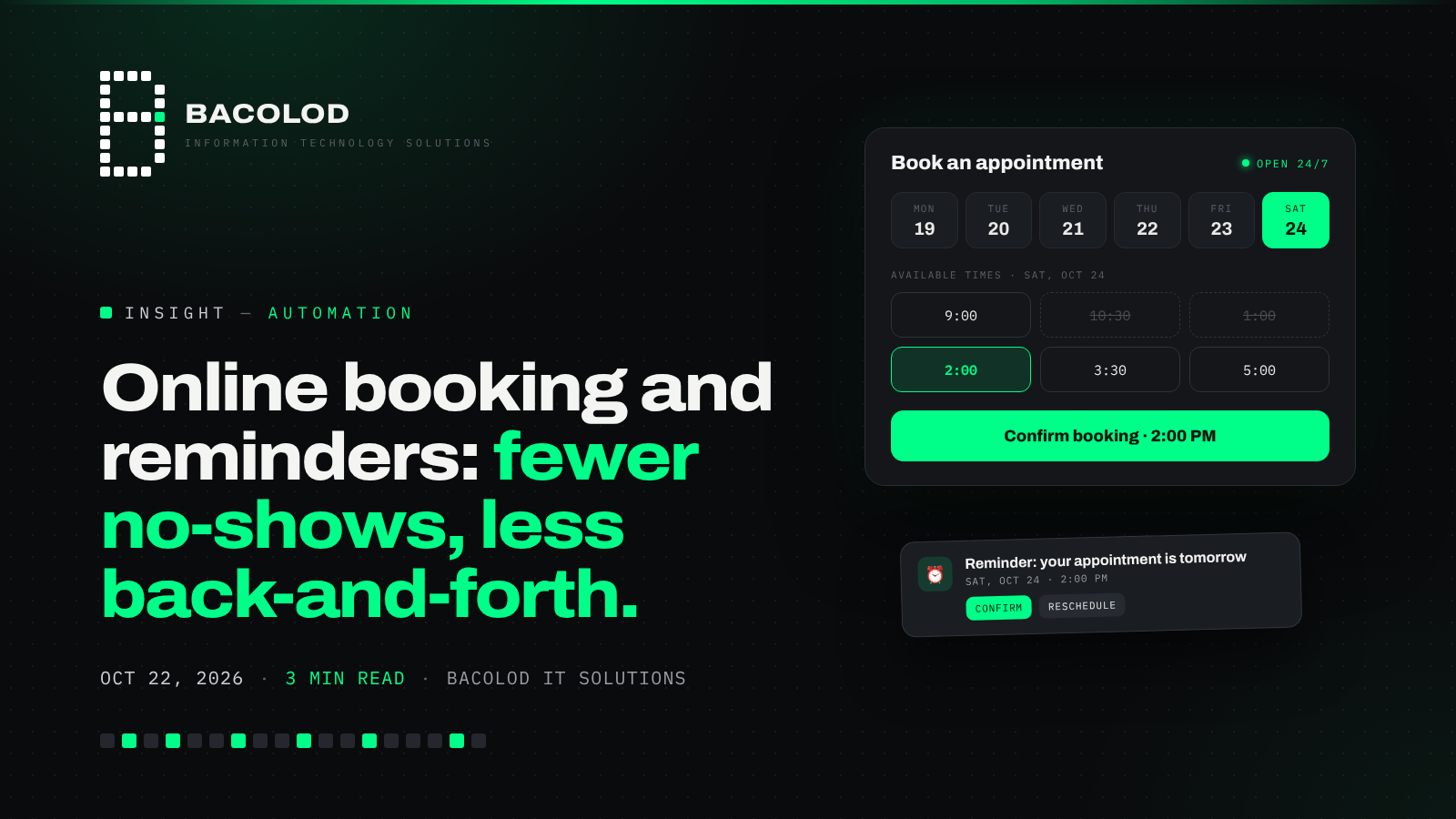
If a task follows the same steps in the same order, with no real judgment in between, it's a strong candidate. Computers are exceptional at “same thing, every time.” Think: copying figures between systems, formatting the same report, sending the same reminder.
2. It quietly eats hours every week
A task that takes ten minutes feels harmless — until you realize it happens forty times a week. Add it up across a month and you're often looking at days of paid time spent on something a script finishes in seconds. The small, repetitive ones are usually where the biggest savings hide.
3. Mistakes keep creeping in
Manual work and human error travel together: a mistyped figure, a missed update, a row pasted in the wrong column. If a task regularly produces small errors that someone later has to hunt down and fix, automation doesn't just save time — it removes a whole category of problems.
4. Other work waits on it
Some tasks are bottlenecks — nothing moves until someone finishes them. If your team is regularly waiting on a report, an approval, or a sync before they can do their own job, automating that step speeds up everything downstream.
5. Nobody actually wants to do it
This one matters more than it sounds. Dull, repetitive work drains people and pulls them away from the things only humans can do — talking to customers, making decisions, being creative. If a task is both tedious and non-strategic, it's exactly what software should be handling.
Where to start
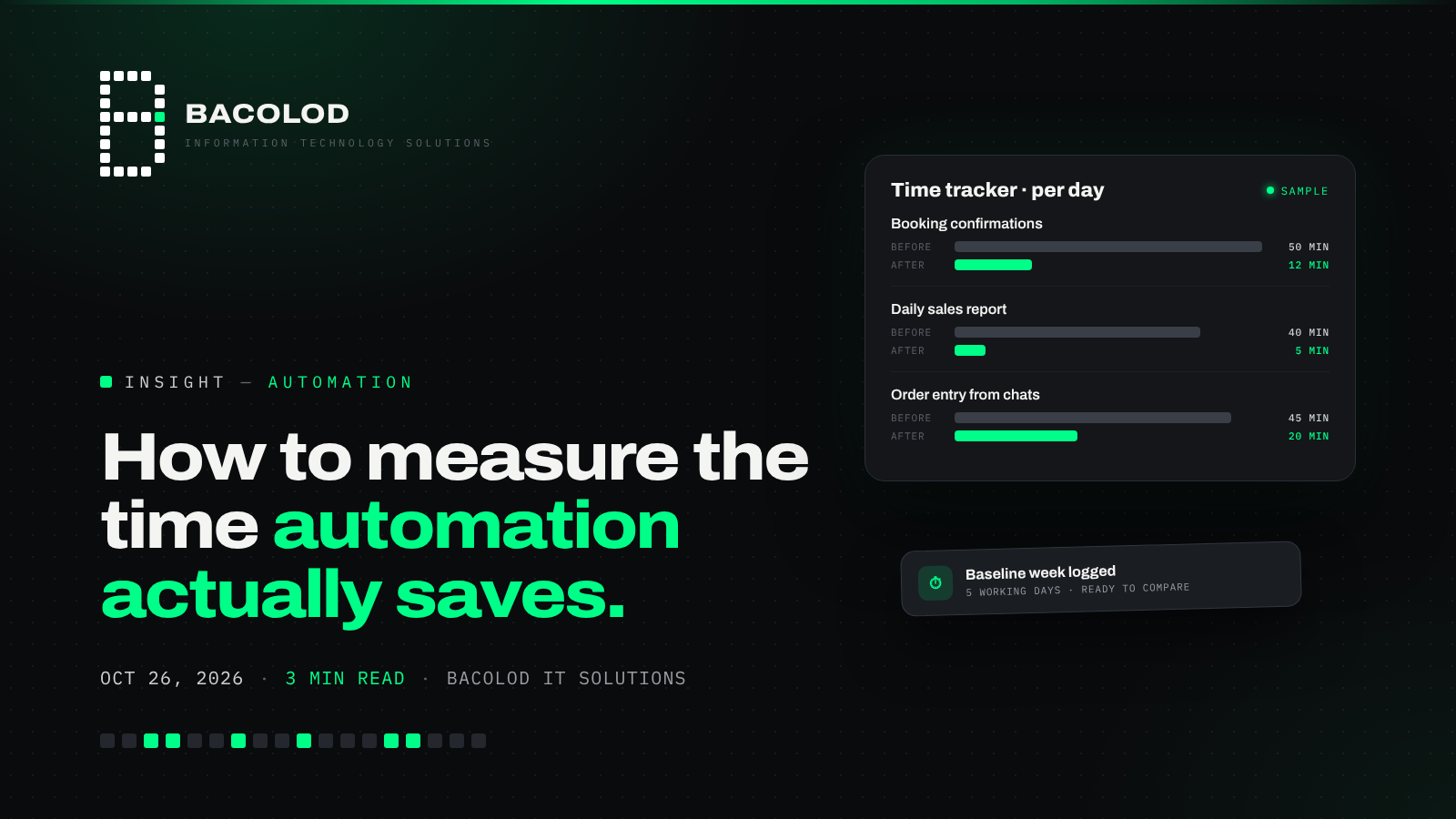
You don't need to automate everything at once. Pick the one task that's most repetitive and most painful, measure how long it really takes, and automate that first. Prove the time saved, then move to the next. That's how “let the bits do the work” actually happens — one task at a time.
Got a task like this?
Tell us what's eating your team's time. We'll show you what handling it with software looks like.
Comments
Join the conversation — no account needed.